Organize, Organize, Organize: 2026 IMPACT Recap
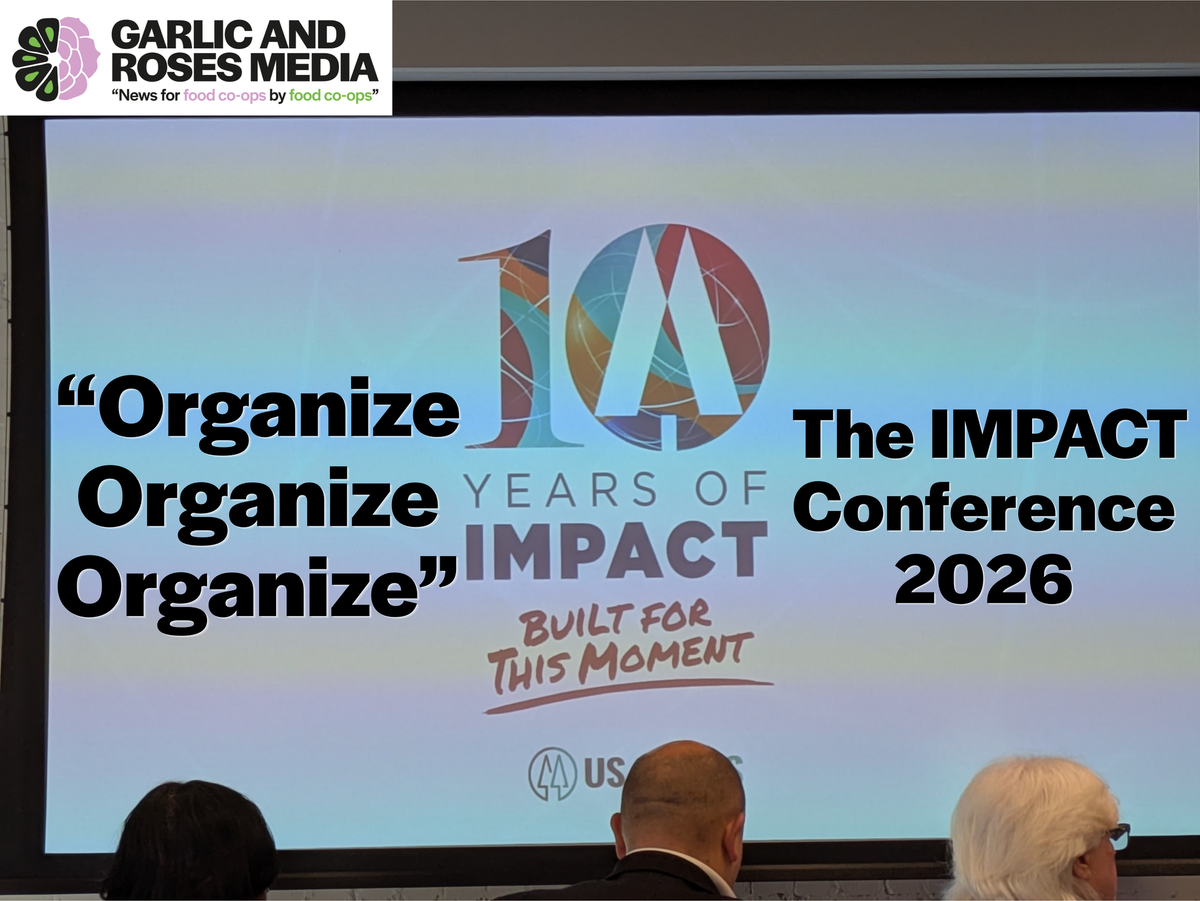
Living in Washington DC, politics is fairly inescapable. It was therefore quite noticeable that walking from the Metro to the site of the U.S. Co-ops 10th annual Cooperative IMPACT Conference, your eyes were drawn to two towering cranes. Less than two football fields from the conference, using the slogan "Built For This Moment", was the hole where the East Wing of the White House once stood. The slogan left "this moment" up for interpretation. The cranes did not.
Speakers throughout the conference fumbled with getting their lips around the words "U.S. Co-ops", the rebranding of the organization which had been known as NCBA-CLUSA since 1985. Doug O'Brien, President and CEO of the organization, got his 'I Am Iron Man' moment at the lectern during his opening remarks when he proclaimed "We're now U.S. Co-ops".
O'Brien spoke passionately about the moment. He explained that after U.S. Co-ops lost their federal funding in 2025, the cooperative community came together to support them. He then asked rhetorically "What does the cooperative community need from their national apex organization right now?" The answers included a vision to reach more people, and help explain the cooperative difference. O'Brien introduced a Learning Hub partnership with Arizona State University to help the co-op curious find expertise. He also announced the Cooperative Community Campaign, designed to fill the funding gap with small dollar contributions from individual co-op members across the country.
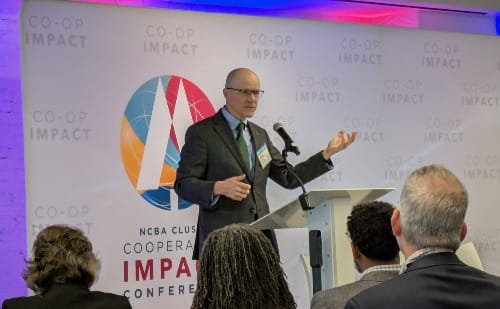
O'Brien signed off with "I'm proud to say U.S. Co-ops is built for this moment."
Day one featured a flurry of Lightning Talks, short presentations about a topic one after another. The session was expertly facilitated by worker-partners from the Baltimore Transformative Learning Collective co-op. Victoria Lebrón from the group gave a memorable line when she said "It IS possible to not accept a type of business built on exploitation and greed"
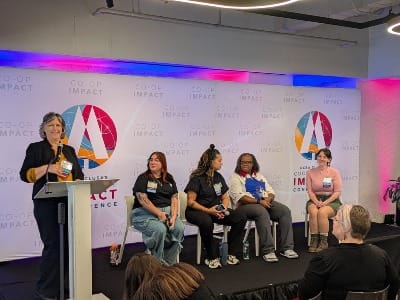
Garlic and Roses' LeAnna Nieratko presented about our brand of 'joyful storytelling' and how gossip can be used to bring people together, instead of punching down. Nieratko explained the history of Garlic and Roses as a worker cooperative looking to fill a storytelling hole in the national food co-op community.
Co-op consultant Gabrielle Davis gave a lighting talk on psychological safety and how to create spaces that hold one another up. JQ Hannah from the Food Co-op Initiative (FCI) gave their Lightning Talk about the fourth wave of food co-op development in an engaging and high energy performance. Hannah said while these food co-ops often can't be the cheapest option on the shelf, they can bring the most value to their communities, in every sense of the term.
The most electric of the Lightning talks however was Caleb Woolcott from the CultivAction Solidarity Cooperative. Woolcott, from Montreal, gave a rousing rendition of the tenets of a co-op manifesto authored by Quebec youth organizers that questioned the status quo of capitalism and even cooperative business as usual. Woolcott was met in the room with enthusiastic applause.
A session titled Innovations in Cooperative Finance was facilitated by Ann Fedorchak of the National Cooperative Bank. The session discussed how to get more capital into cooperative hands, and how to keep interest and borrowing rates low. Jose Julian Ramirez Ruiz of FIDECOOP in Puerto Rico talked about innovative funding relationships they've developed on the island with the growing cooperative movement there.
Day 2
Day two began with Doug O'Brien again on the dais, facilitating a panel called Beyond The Policy Win: Building a Stronger Cooperative Ecosystem. The panel came from incredibly different and interesting perspectives on the topic. Courtney Berner, Executive Director of the University of Wisconsin Center for Cooperatives, runs a non-political department at a state university. Berner talked about how they tried identifying issues that people are facing, like child care and home care, and helping to introduce cooperative solutions.
David Lidz, founder of StreetWell, discussed being highly politically active in order to achieve his cooperative ends. His worker co-op buys foreclosed properties in Baltimore and fixes them up to keep them in the community, rather than falling into the hands of private developers. Lidz has a background in politics and viewed connections with lawmakers as essential to getting projects done.
The last panelist, Terence Courtney is the Director of Cooperative Development & Strategic Initiatives at the Federation of Southern Cooperatives. Courtney talked about turning the co-ops members into policy advocates. When asked for a parting message Courtney said he was channeling 2026 Co-op Hall of Fame inductee Fannie Lou Hamer when he told the room to "organize, organize, organize".
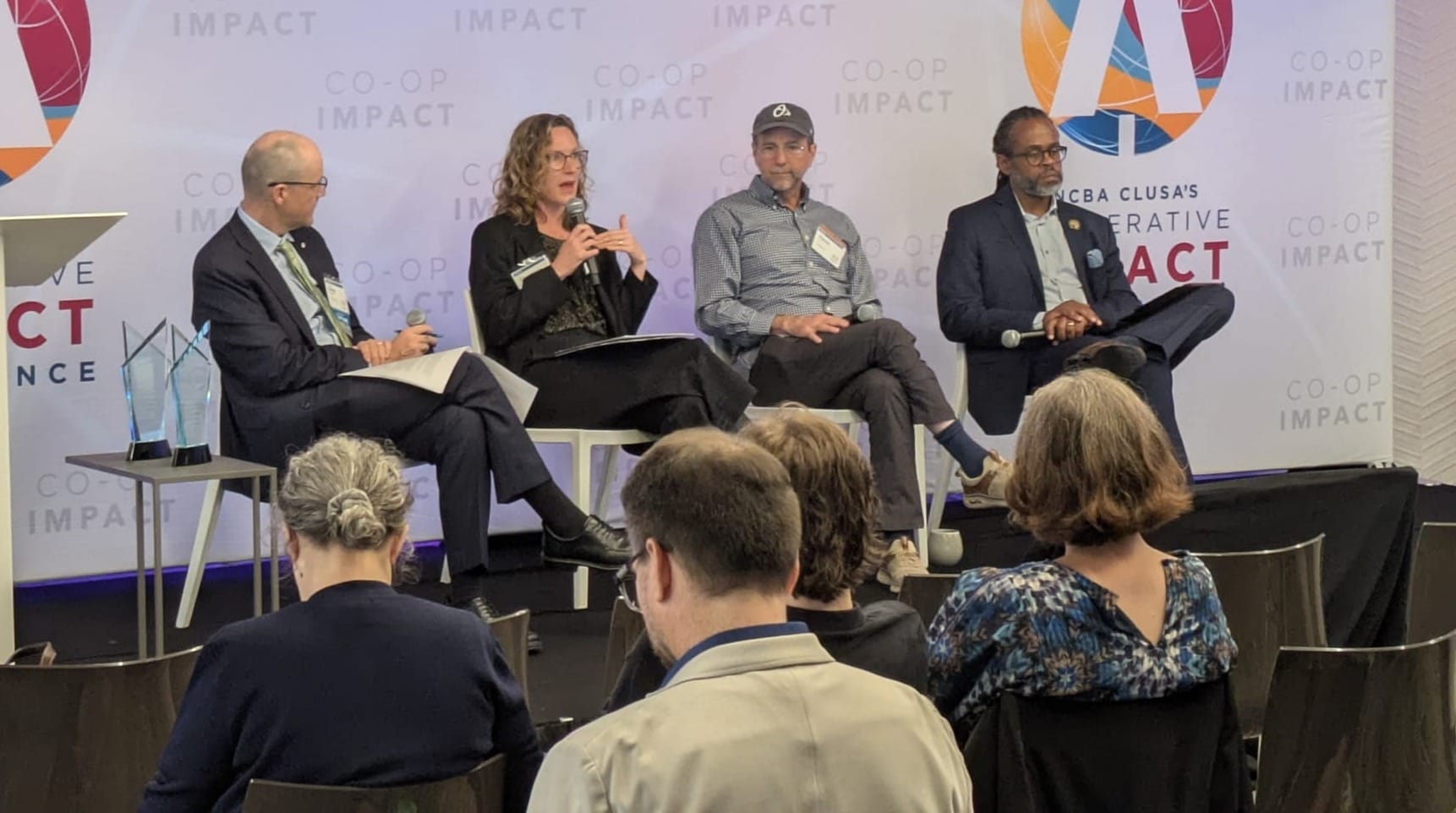
The group agreed that policy advocacy needs to include both data and storytelling. Berner said the sources of data are increasingly being scrutinized by staff from different political offices, so advocates need to be thoughtful about what they bring toa meeting. O'Brien summed up the charge when he said "Good things happen in coops, so how can we translate that into language that resonates with policy makers?"
The conference keynote came from Shawna Nelson, the CEO of Organic Valley. Nelson gave her lifelong connection to cooperatives, going so far as to show a picture of herself at a co-op producer meeting as a one-year old. Nelson has worked for Organic Valley for over 20-years, holding a variety of positions in sales and human resources before being named CEO in 2025.
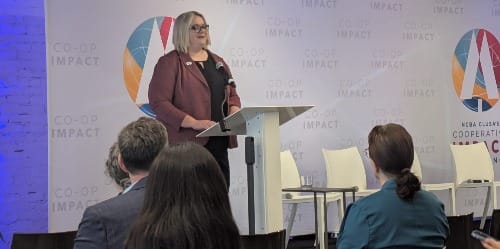
Nelson explained the benefits to farmers of being a part of a producer cooperative like Organic Valley. The company started in 1988 with just 7 farms, and in 2026 has over 1500. Nelson negotiated with the farmers to set a 'buy-price' for milk for all of 2027. That plus an inverted payment structure allows farmers to get paid faster and plan their income better over the course of the year compared to other commodity crops where small price fluctuations can make a big difference over a year.
Lastly, the conference presented their 2nd Annual Film Festival. Winners were announced in three categories. Co-op Food Stores in Hanover, NH won for the social media video. Briar Patch in California won the short form category. The long form video category top prize was awarded to the Seafood Producers Cooperative from Alaska. The winning videos and other submissions can all be viewed here.
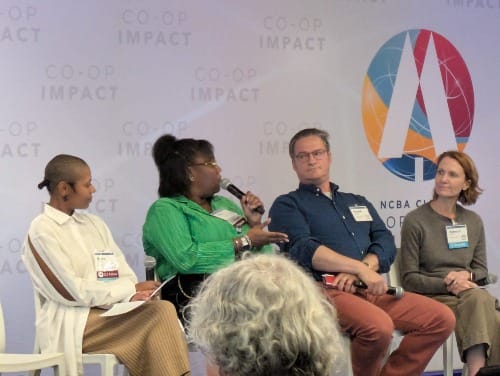
The 10th IMPACT conference didn't shy away from the moment, or how co-ops can organize and support one another to meet it. The sessions were energetic, and contained concrete action steps. Part inspiration, part education, it was exactly the event the movement needed.
Comments ()