
Spinning Cooperation into Gold
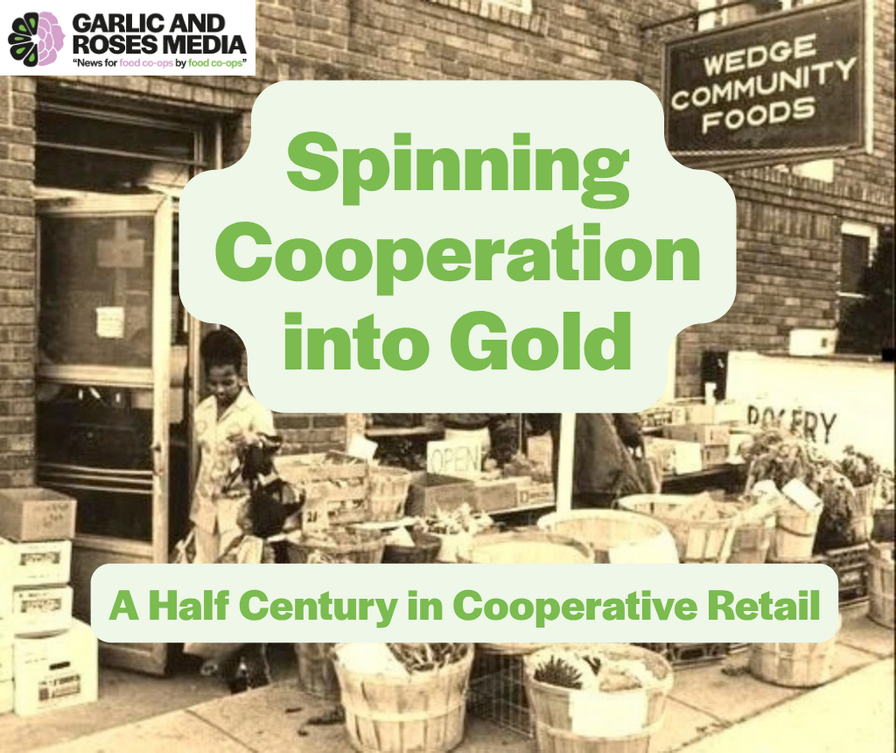
Spinning Cooperation into Gold: Lessons from a half century in cooperative retail with Dave Olson, Senior Director of Strategic Development for National Co+op Grocers
Gold is the traditional gift for a 50th wedding anniversary. For food co-ops, the equivalent might be a 30 lb case of golden raisins — though as NCG's Dave Olson points out, that gift doesn’t quite work for co-ops with restrictions on sulfured fruit. Good thing for me most of our coops have very generous return policies…
In 2026 fifteen NCG-member food co-ops are celebrating their 50th anniversary. It’s a milestone worth marking with more than a clever joke about product ingredient standards, so I sat down with Olson to talk about what it actually takes for a co-op to reach half a century — and what the next fifty years will demand.
Before going further, it’s worth saying: co-op history is fuzzy by nature. Record-keeping in the 1970s and ‘80s fell largely to volunteers, and Olson notes it’s “almost a miracle” any of it survived at all. Even the boundaries of the so-called “second wave” — generally understood as co-ops founded between 1970 and 1984 — aren’t something co-ops themselves fully agree on. So when we talk about “fifteen co-ops celebrating their 50th anniversary this year,” treat that as the best available count, not gospel. Also how do you celebrate an anniversary if you can’t decide which year you started? The wise and kind leaders of CCMA (Hi Megan and Courtney!) count based on how coops self-identify their anniversary dates.
The Real Gold
Having attended multiple co-op anniversary celebrations, including several 50th-anniversary events, Olson describes the real prize not as a gift but as a pattern: successive generations of members and shoppers recognizing that their co-op remains a vital community institution.
“It is genuinely inspiring,” Olson said.
The co-ops celebrating 50 years were founded in the 1970s to give members access to non-processed, unadulterated foods that were hard to find in mainstream grocery stores at the time. For years, co-ops had what a certain kind of shopper wanted and largely had that market to themselves — a captive audience of sorts.
But that audience wasn’t just self-selecting from the start. Olson points to the 1990s as a key growth period, fueled largely by conventional supermarket shoppers arriving at a co-op’s door for the first time — often prompted by a new dietary restriction, perhaps a diagnosis, or a newfound interest in natural foods, and sustainability. They didn’t grow up co-op shoppers; something sent them looking.
“We didn’t always make it easy to be found,” Olson said. “What are we doing to make it easier — or harder — now?”
That question cuts both ways. Co-ops’ early success helped build the entire natural and organic industry as we know it — and today those products are available almost everywhere, from big-box stores to gas stations. The upside is obvious. The downside is that co-ops can no longer rely on product selection alone to stand out and have had to find new ways to stay relevant — while also reckoning with whether they’re still easy to discover in the first place. “This has been a tough adjustment for many co-ops,” Olson said, “but we are figuring it out.”
Part of figuring it out, though, has meant resisting the temptation to chase every new opportunity. A co-op that tries to be all things to all shoppers — stretching into every trend, every new department, every adjacent pursuit — risks losing the focus that made it distinctive in the first place. The co-ops that have lasted 50 years tend to be the ones that stayed close to what they’re good at, and put their energy there instead of spreading it thin across too many categories at once.
What the 50-year survivors have in common
Ask Olson what these co-ops share, and the answer comes down to two words: “growth and reinvention.” They serve different markets and communities, but each has had to remake itself more than once — adopting new technologies and practices and expanding its vision well beyond what its founders imagined. Along the way, each went through multiple rounds of growing pains, and at various points had to simultaneously re-establish its founding values and broaden its sense of who the coop can and does serve.
The road to a century
What will it take for these same co-ops to reach a century? More of the same competitive maturity that got them this far — and faster. “Some co-ops are wickedly effective competitors, but most co-ops are still figuring it out,” Olson said. “This needs to continue or even accelerate.”
Differentiation matters too — finding new ways to be meaningful to existing members and to the non-member shoppers who are, in effect, future members. But the bigger lever may be scale. Co-ops need to “level-up as a cooperative chain,” Olson said, building economies of scale wherever possible, because the grocery industry rewards efficiency at scale, and rewards it ruthlessly. Even PCC — NCG’s largest member by both sales and store count — is small next to most of its competitors. The path forward means co-ops cooperating with each other more, agreeing to be more alike in the ways that generate real economies of scale, while still tending to what makes each community different.
First-wave co-ops that reached 50 certainly celebrated, too. Hanover Co-op Food Stores marked its 75th anniversary in 2011 and turns 90 this year. Putney Food Co-op turned 85 this year. And PCC, founded in 1953 (post-war coop baby boom, who knew?) — arguably straddling the line between the first and second co-op waves — threw a major celebration in 2003.
Advice for the newlyweds, or the 3rd and 4th waves
For co-ops still working toward their own 50th, Olson’s advice was direct:
Make service the priority. Treating every shopper’s experience as priority number one is a real differentiator — one that many competitors have either abandoned in the race for the lowest prices, or simply can’t deliver consistently. Build authentic, lasting relationships with customers over time.
Curate, don’t just stock. Local products can set a co-op apart, but only when the co-op acts as a conscientious curator — quality over quantity — and works with local producers who prioritize the co-op’s needs as much as the co-op prioritizes theirs. And if a co-op is going to do the extra work of sourcing and selling local, its staff and in-store messaging need to tell that story, and explain why it’s worth the extra dollar or two.
Don’t go it alone. Isolation and insularity are real vulnerabilities. Boards should meet with other boards to sharpen their governance; general managers should reach out to other general managers. Cooperators are busy, but generous once you have their attention — candid about both their successes and their mistakes. Real relationships with other co-ops, whether through NCG or informally with regional neighbors, tend to reveal shortcuts to success and help a young co-op sidestep pitfalls that older co-ops have already learned the hard way.
A personal note
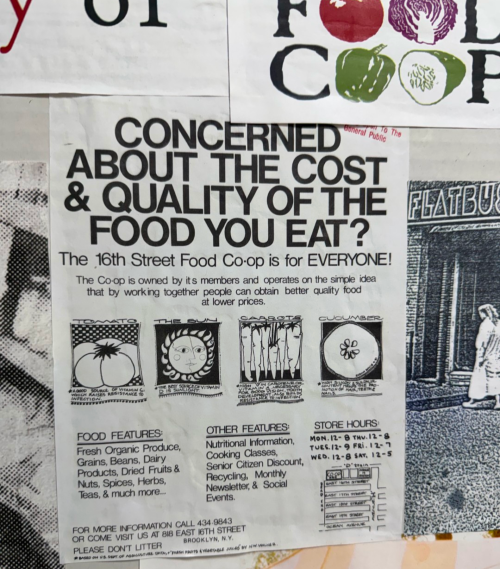
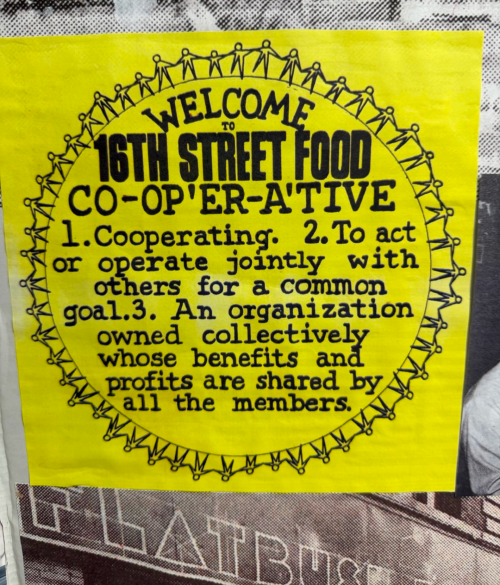
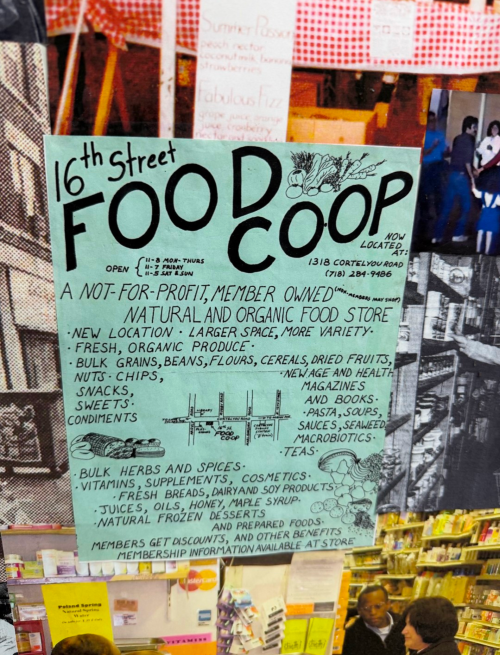
I’ll admit this story is a little close to home. I now work at Flatbush Food Cooperative in Brooklyn, New York — one of the fifteen co-ops celebrating its 50th anniversary this year. Being part of a community that’s been showing up for its neighbors for half a century has a way of putting the day-to-day work in perspective. Every shift is a small continuation of something a lot of people built long before I got here, and it’s hard not to think about that when you’re ringing up a member who’s been shopping there since the co-op was a folding table and a mailing list. Make a grown man cry.
Fifteen for Fifty: The NCG Co-ops Marking a Half-Century in 2026
National Co+op Grocers counts fifteen member co-ops celebrating their 50th anniversary this year — by NCG’s own account, the largest cluster of 50th-anniversary celebrations it’s seen in a single year. Most trace back to 1976, born as small buying clubs before growing into full storefronts.
• 3 Rivers Natural Grocery — Fort Wayne, IN. Started as a church-basement buying club in 1976 with 200-plus members; expanded three times before landing in its current space in 2003.
• Belfast Community Co-op — Belfast, ME. Grew from a small 1976 buying club into a community cornerstone; marking the anniversary with an August 22 celebration.
• Bloomingfoods Co-op Market — Bloomington, IN. Opened July 1976; now operates two locations.
• BriarPatch Food Co-op — Grass Valley/Auburn, CA. Founded 1976; celebrated with a May owners’ party and is devoting two issues of its member magazine to 50 years of co-op history.
• Chequamegon Food Co-op — Ashland, WI. Opened August 1976; marking the anniversary with an August parking-lot celebration.
• Cook County Co-op — Grand Marais, MN. Opened 1976; celebration planned for fall.
• Deep Roots Market — Greensboro, NC. Traces to a 1960s vegetarian buying club in a college dorm basement; incorporated as a co-op in 1976.
• Flatbush Food Cooperative — Brooklyn, NY. Marked the anniversary with a June member-appreciation celebration.
• High Falls Food Co-op — High Falls, NY. Marking the year with a full slate of community events and a themed annual meeting.
• Honest Weight Food Co-op — Albany, NY. Began as a 20-member basement buying club, now an 18,000-square-foot store.
• La Montañita Co-op — Multiple NM locations. The largest food co-op in the Southwest, with four stores including a newly opened Albuquerque location.
• Middlebury Natural Foods Co-op — Middlebury, VT. Collecting member memories to help shape its anniversary celebration.
• Ukiah Natural Foods Co-op — Ukiah, CA. Incorporated in 1976 as the Homestead Exchange; celebrated in April with a vineyard party.
• Upper Valley Food Co-op — White River Junction, VT. Hosting a summer-long series of first-Friday events building to a 50th celebration.
• Wheatsville Co-op — Austin, TX (two locations). Celebrated in March with live music, local vendors and limited-edition merch.
Comments ()