
The Best Is Yet Tacoma: How CCMA is Run
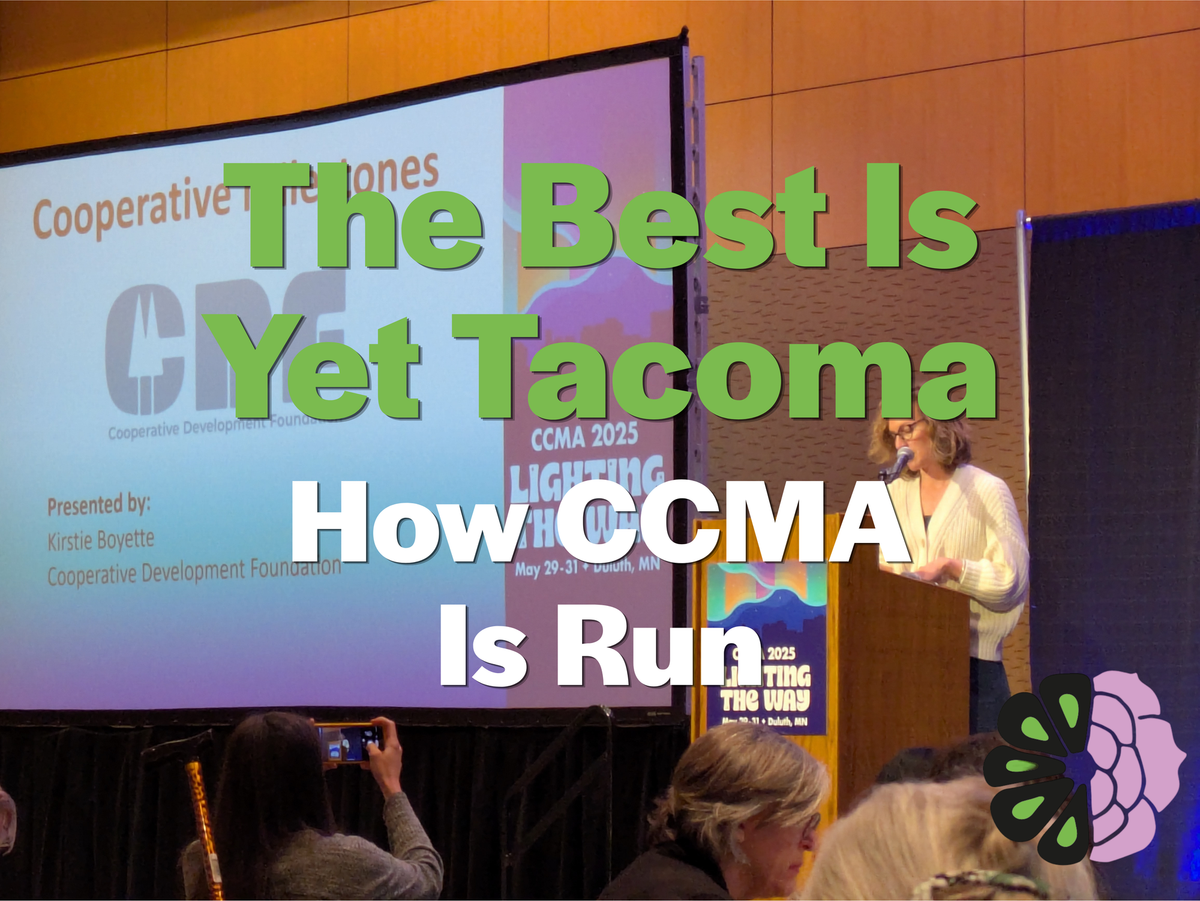
“It's such a beautiful community of people. It is really energizing to be in the space, and it feels really good to be part of that, and to be trusted to steward this conference on behalf of the food co-op community.”
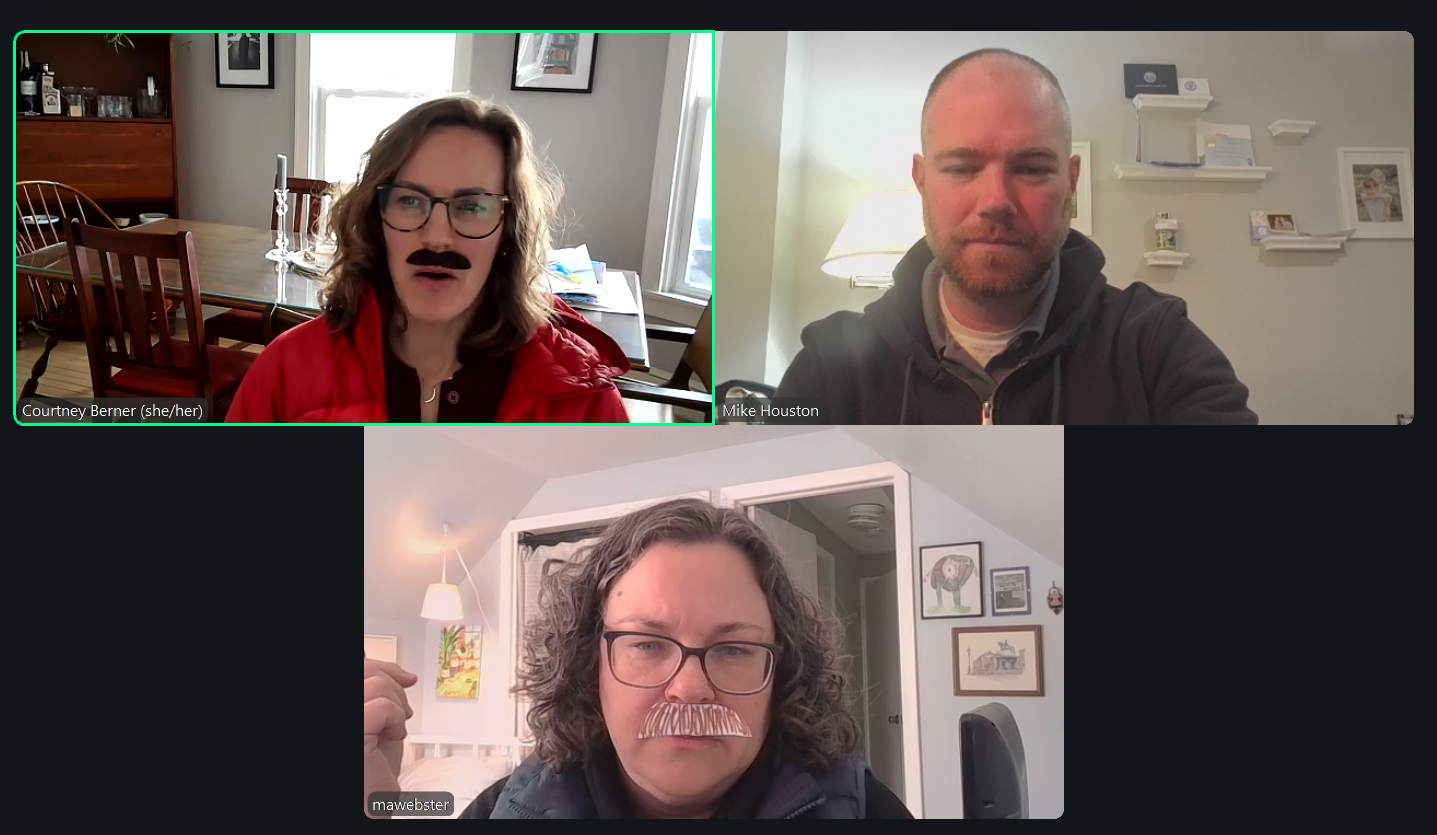
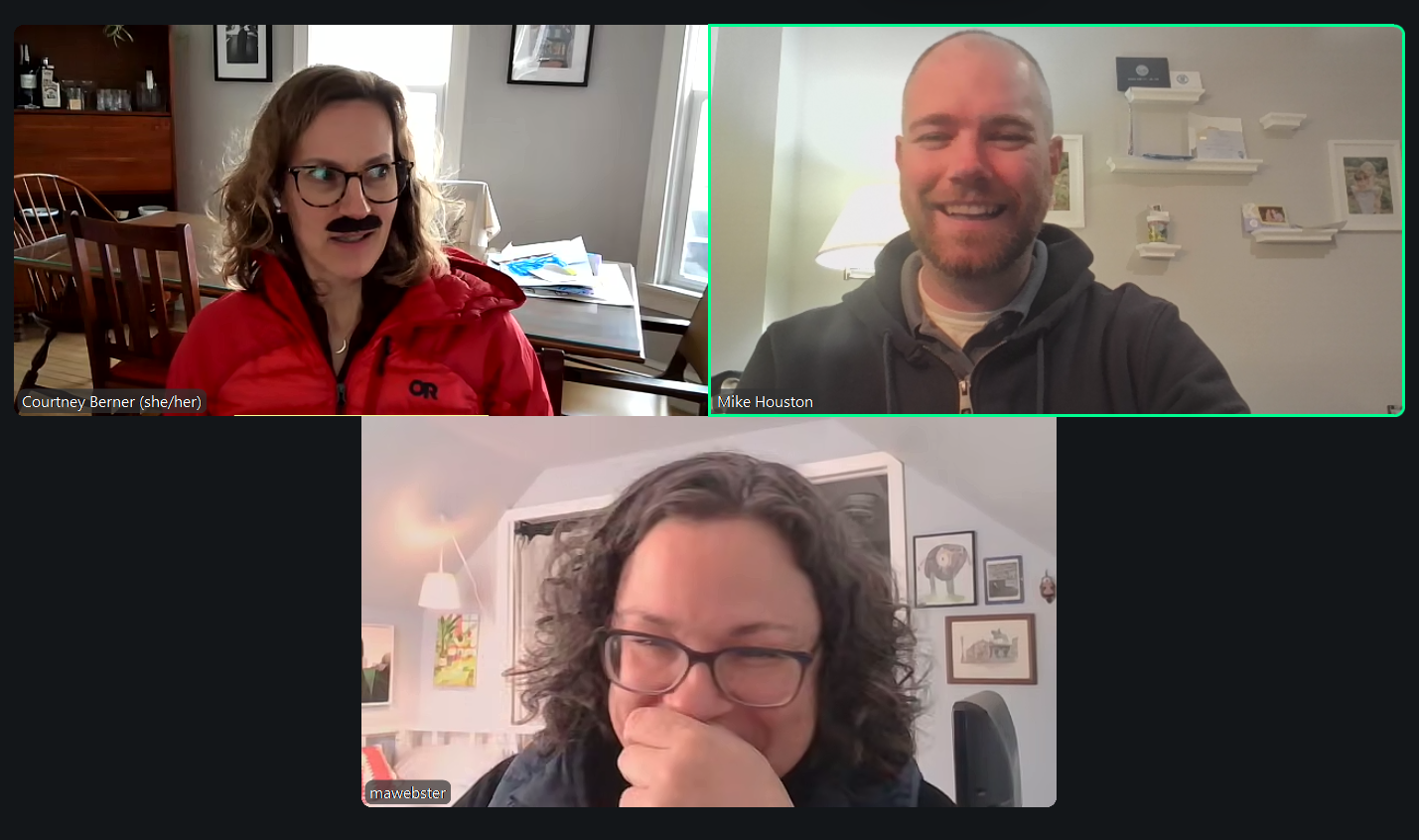
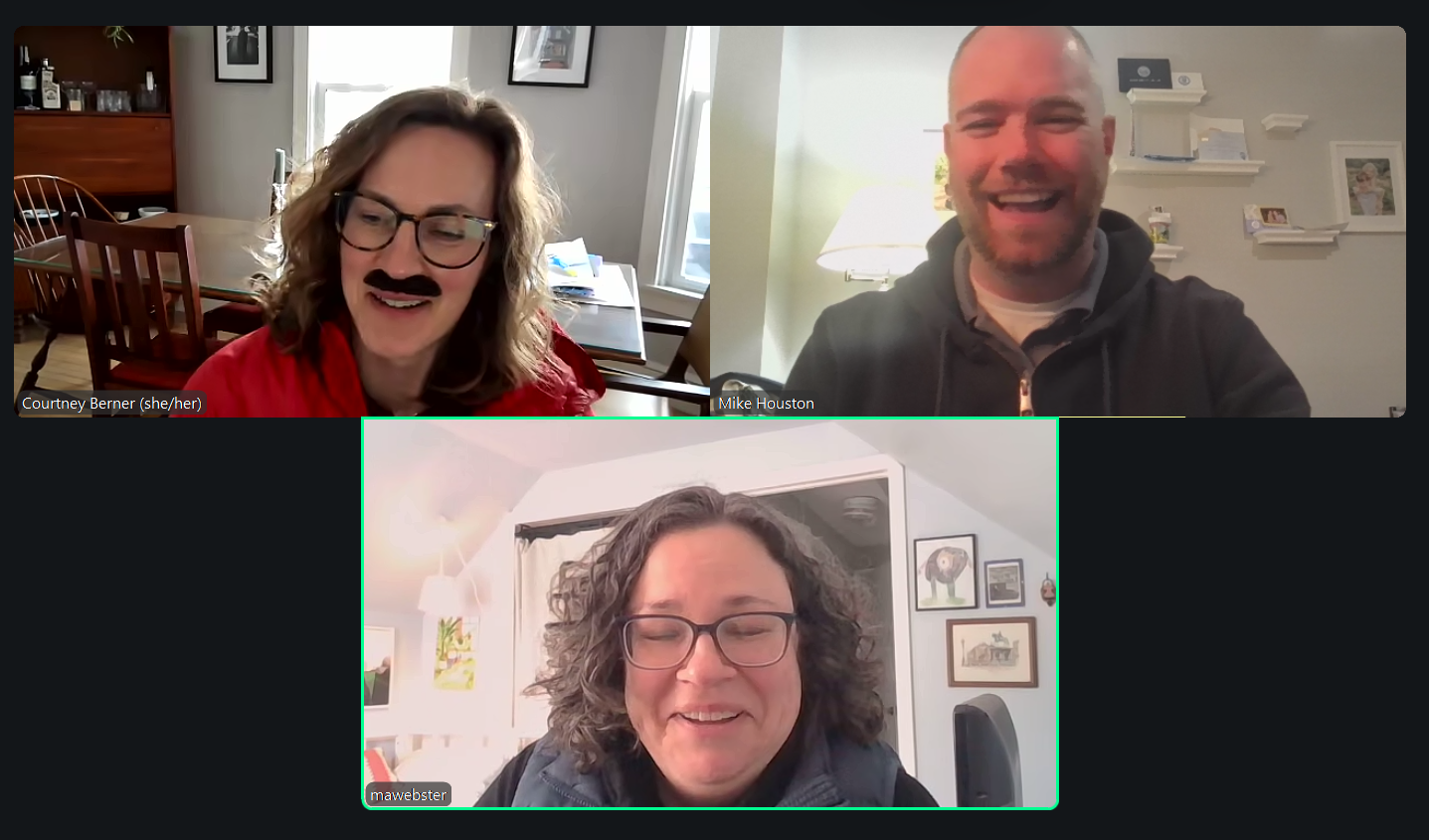
Courtney Berner, Executive Director of the University of Wisconsin Center for Cooperatives, delivered that heartfelt summation of what it feels like to put on CCMA each Spring while wearing a stick-on fake mustache.
Megan Webster, the Outreach Programs Manager who runs CCMA also wore a fake mustache for our interview, though hers was hand-drawn on paper with a brown marker.
“I think it's gonna be great. I think the energy is going be really good. I was thinking, with the state of the world, we are in crazy times, and trying to have hope, it's so important for cooperators to come together. Just bring some joy into the space, because God knows we need it.”
Their tone about the importance of gathering and community in this moment was spot on, and their facial accessories perfectly underscored the point about bringing joy and fun into what can be difficult and thankless work.
CCMA 2026 in Tacoma, Washington will be Megan and Courtney’s 10th conference running the show. The University of Wisconsin Center for Cooperatives took over putting on CCMA in 2017 after the National Cooperative Business Association had run the conference for a few years. Prior to that it had been run by Ann Hoyt, a faculty member at the University of Wisconsin-Madison.
“So it was at UW for a long time before we were involved, and it’s kind of nice it came back to UW,” said Berner.
Webster’s multi-year planning process for each aspect of the conference has led to a successful and engaging experience year after year. 2026 is tracking to be the best post-COVID attendance with representatives from nearly 80 food co-ops registered before the early bird deadline. Berner and Webster felt skepticism from some in the food co-op community about their ability to steward the conference when they first took over, but the results speak for themselves.
“Megan does not like to be in the spotlight, but she is at the center of a lot of this. I want to remind people, without horrifying her, that she puts a lot of heart into CCMA. The success of this conference can be attributed to her,” said Berner.
Webster was unwilling to give herself the same type of pat on the back for her organizing, but she did provide an example of how much the conference means to her.
“I cry every year at CCMA. I just cry under the desk at registration, and then it’s fine.”
[editor’s note: following this comment, the two women discussed for a full page and a half in the transcript about whether Webster had a 10-year unbroken streak of crying or whether she had managed to stay dry at Portland 2024]
“Every year, at some point, Megan hides, and then we have to appease her with a piece of carrot cake. Someone from our team sneaks out from the conference and finds carrot cake to soothe Megan,” said Berner.
“I can be bought,” shrugged Webster.
The tears are more than justified when you hear some horror stories of CCMA past.
“The first was when our laptops were stolen, by people who broke…” began Berner
“My first… our first day of hosting. Ever,” said Webster
“Yeah, our first day of hosting the conference ever, and someone came into the hotel and stole our laptops,” exclaimed Berner
Webster likened going back and reading notes from CCMA planning from years back to reading a high school diary. They've learned a lot over the last ten years.
There is of course a wider world of planning help once a CCMA location is identified. “Just like a co-op, we’ve got lots of committees. So many committees!” chuckles Webster.
The host committee made up of nearby co-ops and other community organizations helps to plan the tour and closing night party logistics and arrange for volunteers. A separate committee reviews awards nominations and selects the winners. Proposals for the breakout sessions are reviewed by the national planning committee and rated against a rubric. The democratic decision-making process doesn’t end with policy governance.
CCMA planning happens in overlapping circles due to the multi-year timeline. Webster had a familiar sounding wish for anyone who has spent time around food co-ops. “I would love everything to be earlier. But, that’s not the nature of co-ops.”
Typically, the theme for each CCMA is released in December, followed by the call for breakout session proposals. Keynotes and breakout sessions need to be announced in time so attendees can know what they’re signing up for. This year’s conference features five tracks, plus keynotes, cooperative dialogues hosted by Jon Steinman and Laura King, and more.
Webster wants people who have never attended a CCMA before to know that there is truly something for everyone. “For many years, people were like ‘CCMA is just for boards’, and it’s not,” she explained. The conference is typically attended by roughly 40% board members, 40% staff members, and 20% people who support food co-ops in a variety of ways.
“There will always be governance content, but what’s the word I’m looking for? My brain is not working. I don’t have my mustache on,” joked Webster.
“Put your mustache back on,” implored Berner.
Attendees have given feedback that even though different tracks are designed for governance or operations, people often like to bounce between tracks and select breakout sessions that may not necessarily conform to their role with their co-op.
While the conference is organized for everyone to be able to attend and learn something, there is only one authorized and official CCMA mascot.
“Billy Goat…” begins Berner
“He’s William T. Goat, please use his government name,” interjects Webster.
The mascot is a four-inch plastic goat toy that screams when you press a button. It traces it’s time with CCMA to the 2020 virtual Covid conference when it made several appearances on the live feed introducing the sessions. Mr. T. Goat has since made appearances at all subsequent CCMAs, along with a growing number of goat accessories.
The mustaches and goats and carrot cake jokes all help to keep the job fun and joyful, but the effort and emotional work that goes into putting on this conference for the food co-op community year after year cannot be understated. Berner and Webster take the responsibility seriously, without taking themselves too seriously.
“We have a really small team, and there’s a ton of work and heart that goes into CCMA. I try to be the yin to Megan’s yang or the yang to Megan’s yin,” says Berner.
“More like she’s my therapist,” quipped Webster.
Comments ()