The Era of Localwashing Is Here
I’ve been wanting to write about this concept for a while, but something finally pushed me over the edge. The term ‘local’ as it relates to food has been adopted by every grocery chain, restaurant, food truck, and cafeteria salad vending machine in the country it seems. But this photo sent me into a spiral:
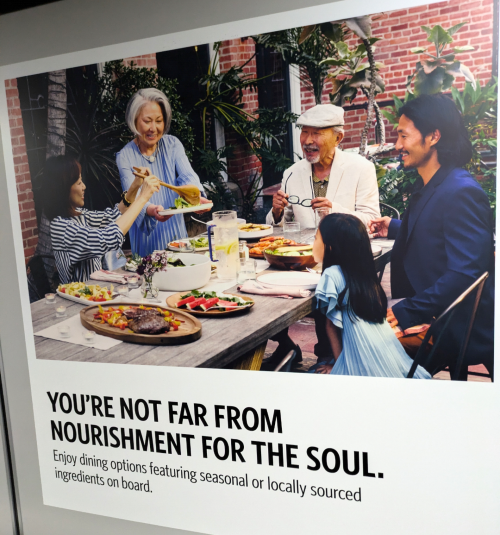
You’re reading that correctly. That is a major airline, advertising as you walk down the jet bridge to their plane that they feature “locally sourced ingredients on board.” On the one hand, I suppose it’s technically true that if you fly from everywhere in the country, some small percentage of your planes will be located near the ingredients that eventually make their way into your half ounce pretzel bags. But in the real world, it’s an absurd claim to make.
Localwashing.
You’ve probably heard the term greenwashing. It means companies make claims about environmental practices that are either misleading or outright false. Carbon offsets, ocean cleanups, ingredient sourcing claims. While some environmental claims are genuine, many others don’t stand up to scrutiny. It’s the reason that third party certifiers like USDA Organic or Certified Naturally Grown exist. To scrutinize and verify these claims. Businesses know many consumers care about environmentalism and climate change, so there’s real value in greenwashing. They can sell more if people think they’re helping to make positive change.
No such oversight exists however for the term ‘local’. The USDA defines local products as traveling less than 400 miles from its origin, or being produced within the same state where its sold. Most individual co-ops use definitions from 100-300 miles, or sometimes state lines, to define what products they label as local. In the last decade, the demand and market for local products has exploded. One survey showed 87% of grocery shoppers said the availability of local food is either "very" or "somewhat" important in choosing a store. No wonder so many big companies are jumping on the trend, which began at co-ops and independent grocers.
Local sourcing is a stand in for several things that consumers care about when selecting products. First there’s items that are locally grown, largely produce. Those products are getting to the co-op faster, using fewer resources to get there, and hopefully cutting down on food waste by getting to people’s fridges within days of being picked. Local produce often comes with less packaging due to the shorter journey. Apples at my home co-op are merchandised in the wooden crate they’re delivered in. No plastic, not even shrink wrap, ever touches them.
Those reasons for purchasing locally fall mostly in the environmentalism and sustainability bucket. Then there’s other local products that are businesses headquartered near the co-op. These items like beers, cheeses, baked goods etc aren’t necessarily made with locally grown ingredients. The reason for supporting these local products is to keep money spent at the store circulating in the local economy, and to support what are often small food businesses.
Co-ops are increasingly the last and best on-ramp for small producers into grocery retail. Chain grocers have concentrated their purchasing to just one or two wholesalers for efficiency. Some don’t even make buying decisions at individual stores any more. Set plan-o-grams are handed down from corporate. The salsa aisle in Missouri looks identical to the one in Oregon. But these stores see the usefulness of the term ‘local’, so they’ve incorporated it into their branding.
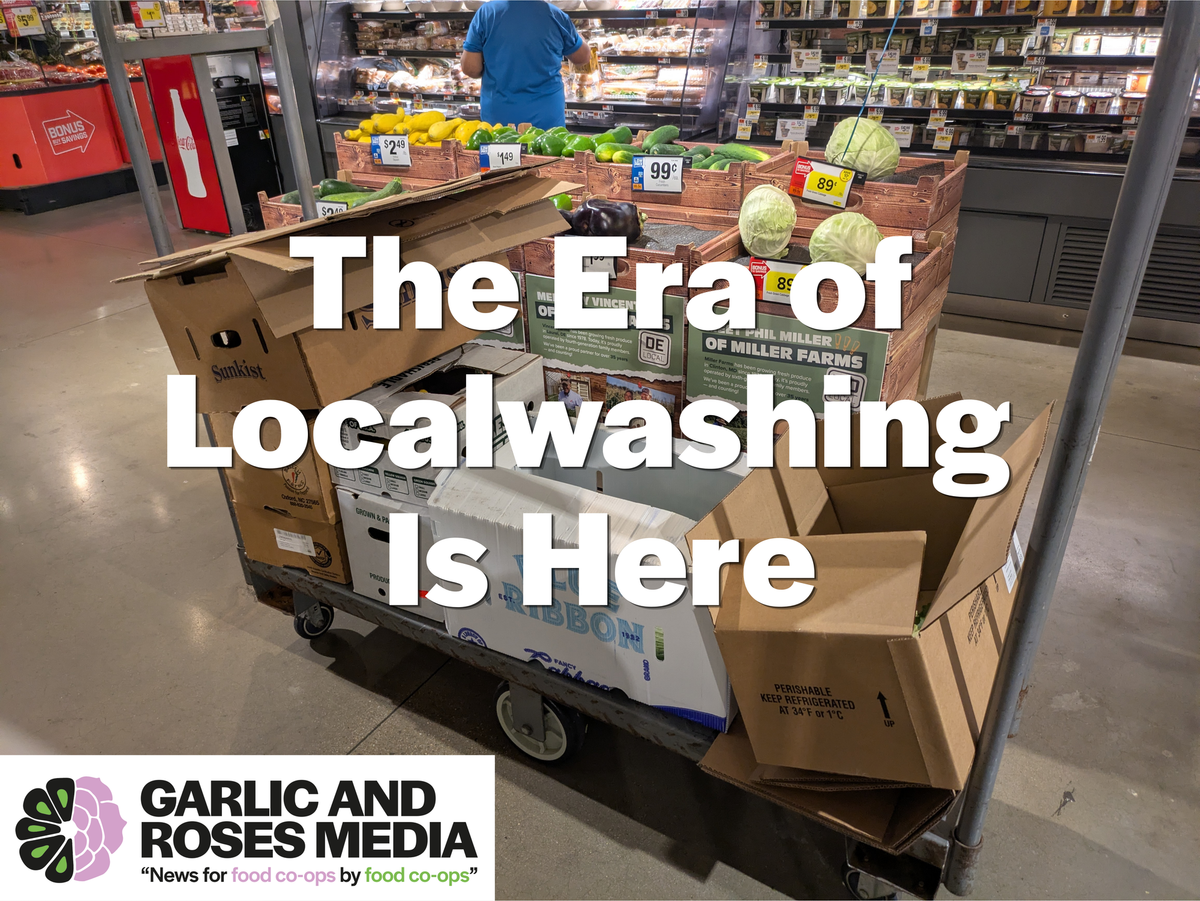
I’m always on the lookout for this when I visit chain grocers. I’ve even taken to emailing the farms they claim to source from when they’re listed individually, just to see what I can find. The picture in the title card of this article is a major grocery chain advertising a specific Maryland underneath what's labeled "Fresh Green Cabbage". Both things are true, Miller Farms exists in Maryland, and that is fresh green cabbage above the sign. The box that cabbage came from, on the U-boat below however, came from the branding of PennRose farm in Knoxville, TN. (496 miles away if you're playing along at home)
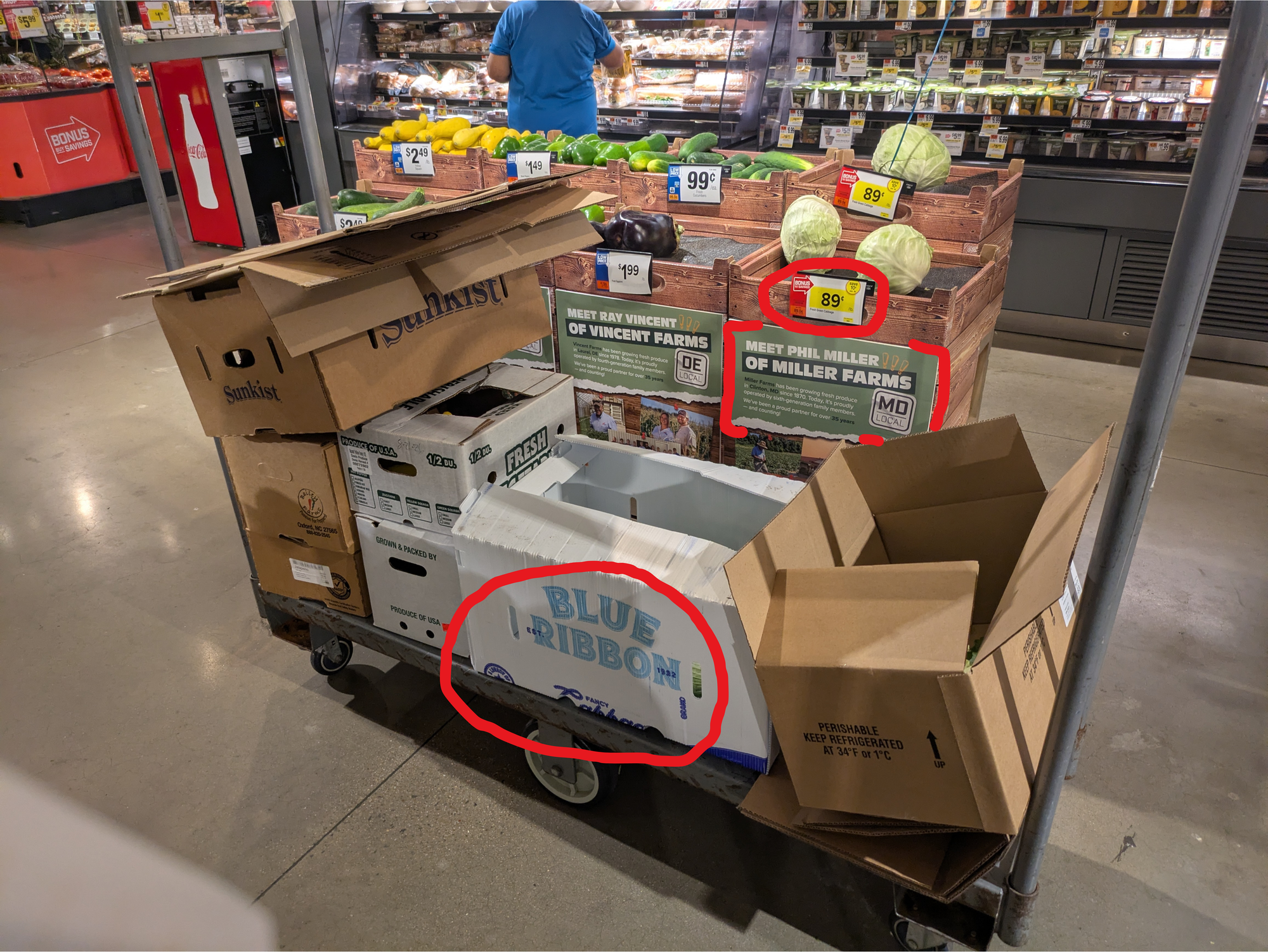
Local buying is hard, especially the way co-ops do it. It involves liaising with dozens to hundreds of individual companies to place orders, keep up with individual invoices and price changes, and receive extra deliveries of individual cases. It’s hard work. We do it because we believe in having strong genuine local purchasing programs, and because its what our members and shoppers expect from us. That’s why its so frustrating when you walk into a chain grocer with a faux farmstand display that says “Local*” in huge letters. The asterisk explains in fine print that their definition of local is 500 miles from their store.
So how do we protect our turf? We can help educate our customers. Be more sophisticated when we talk about local and differentiate between locally grown and food businesses with local ownership. Talk about the different reasons your co-op supports local vendors, and take customers behind the curtain of the work that goes into those purchasing programs. Educate customers on your definition of local and tell them what to be on the lookout for when they go to chain grocers who claim to support local products. Some co-ops have even taken to using a hyperlocal definition of between 2-5 miles from the store.
And if you get on a plane from Denver to DC that claims to have locally sourced ingredients on board, prepare to roll your eyes so hard that they risk getting stuck that way forever.

Comments ()