
Socialism Has a Branding Problem. Co-ops Can Help
“Congress denounces socialism in all its forms, and opposes the implementation of socialist policies in the United States.” -House Resolution 58, November 2025
The term ‘socialism’ has always been fraught in America. For older generations, there are links to the former Soviet Union and lingering tensions from the Cold War. China’s one-party rule Communist Party of China (CPC) also is strongly associated with the term. American immigrants from countries like Cuba, Venezuela and Nicaragua have brought negative feelings about their experiences with socialist governments.
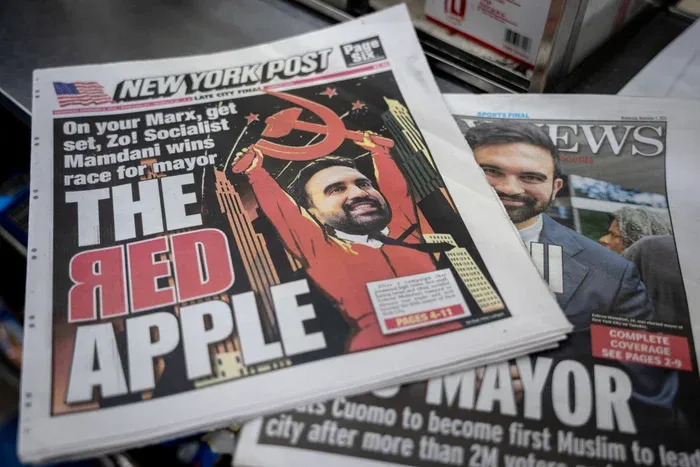
The Democratic Socialists of America (DSA) traces its roots back to the 1970s, but has grown in prominence in US elections since Bernie Sanders’ 2016 Presidential Primary campaign. While DSA is not an official political party, its members have won elections using a DSA platform, and the group does make endorsements. Zohran Mamdani, a DSA member and endorsee, won the New York City Mayoral election last November. The right-wing NY Post, eager to brand Mamdani a socialist in the public’s mind, greeted his victory with the headline “The Red Apple” with a picture of the mayor-elect holding a hammer and sickle.
The strict dictionary definition of socialism is devoid from the broader context of its previous real-world implementation attempts. It’s simply “a political and economic theory of social organization which advocates that the means of production, distribution, and exchange should be owned or regulated by the community as a whole.” Cooperative economic enterprises exist that facilitate ownership and regulation of each of those means.
Similarly, the platform of DSA focuses on planks that share commonalities with the cooperative principles. Cooperative principles 1 and 2 are voluntary and open membership and democratic member control. The DSA platform lays out democratic reforms like universal suffrage and congressional election changes to achieve proportional representation. DSA advocates for working class economic principles available to all.
Public perception however is where the two begin to differ. Efforts from Joseph McCarthy all the way to Fox News to brand ‘socialism’ as antithetical to America’s rugged individualism have proven effective. Even with polling gains in recent years, the percentage of Americans who have a positive view of socialism tops out around 38-40%. Among Republicans, positive views of socialism are currently at 14%. Policies like Medicare For All or Universal Basic Income are often tarred with the ‘socialism’ label as a means of driving down their appeal. The one positive socialism can broadly claim is awareness; 85% of people say they know at least a little about socialism.
Cooperatives suffer from the exact opposite starting place. Only 7% of respondents to a 2019 poll said they were very familiar with co-ops. People can be members of cooperatives like REI or a credit union and still not understand exactly what it means. But co-ops a very well regarded by those who are aware of them. A 2025 poll conducted for NCBA CLUSA showed that 81% of respondents believed that cooperatives provide value to their consumers. 75% agreed that cooperatives helped to keep money circulating in the local economy.
Is there an opportunity for a marriage between large platform groups who push for a more socialized economy and cooperatives which operate successfully but without notoriety? Unions, DSA and left-leaning organizations could take the sting out of the ‘socialism’ charges by embracing businesses who operate within our capitalist structure, but in a democratic and more ethical way. Cooperatives could take their beloved-but-unknown indie band mystique and break into the mainstream of consumers by working with this broader movement. Feels like the potential for a real win-win.
The seeds for this union are being planted. DSA has an article by Dave Anderson on their site promoting the worker-owner model as an economic strategy from back in 2015. Bernie Sanders campaign alum Faiz Shakir, who co-founded More Perfect Union, mentioned cooperatives from the stage at Crooked Con last Fall when discussing political strategies. Daniel Wortel-London wrote a piece for Jacobin in 2024 called Worker Co-ops Have a Role to Play in Socialist Strategy.
In that article, Wortel-London says “But to build the solidarity we need to win, we must identify the strongest materials for generating it: not bowling leagues or debating clubs, but the material benefits of cooperation.”
Cooperatives provide a real-world business example of non-extractive and solidarity-based economics, not socialist theory in a policy platform. Supporting the growth, success and visibility of consumer and worker cooperatives should be a priority for anyone looking to advance an alternative to our late-stage capitalism. The democratic values inherent in the one-member one-vote model are also an important differentiator at a time when ballot access and democracy are under assault. The left needs economic policies that can have broad appeal, and co-ops can be that answer.



Comments ()