
Hunger In America Is (???)
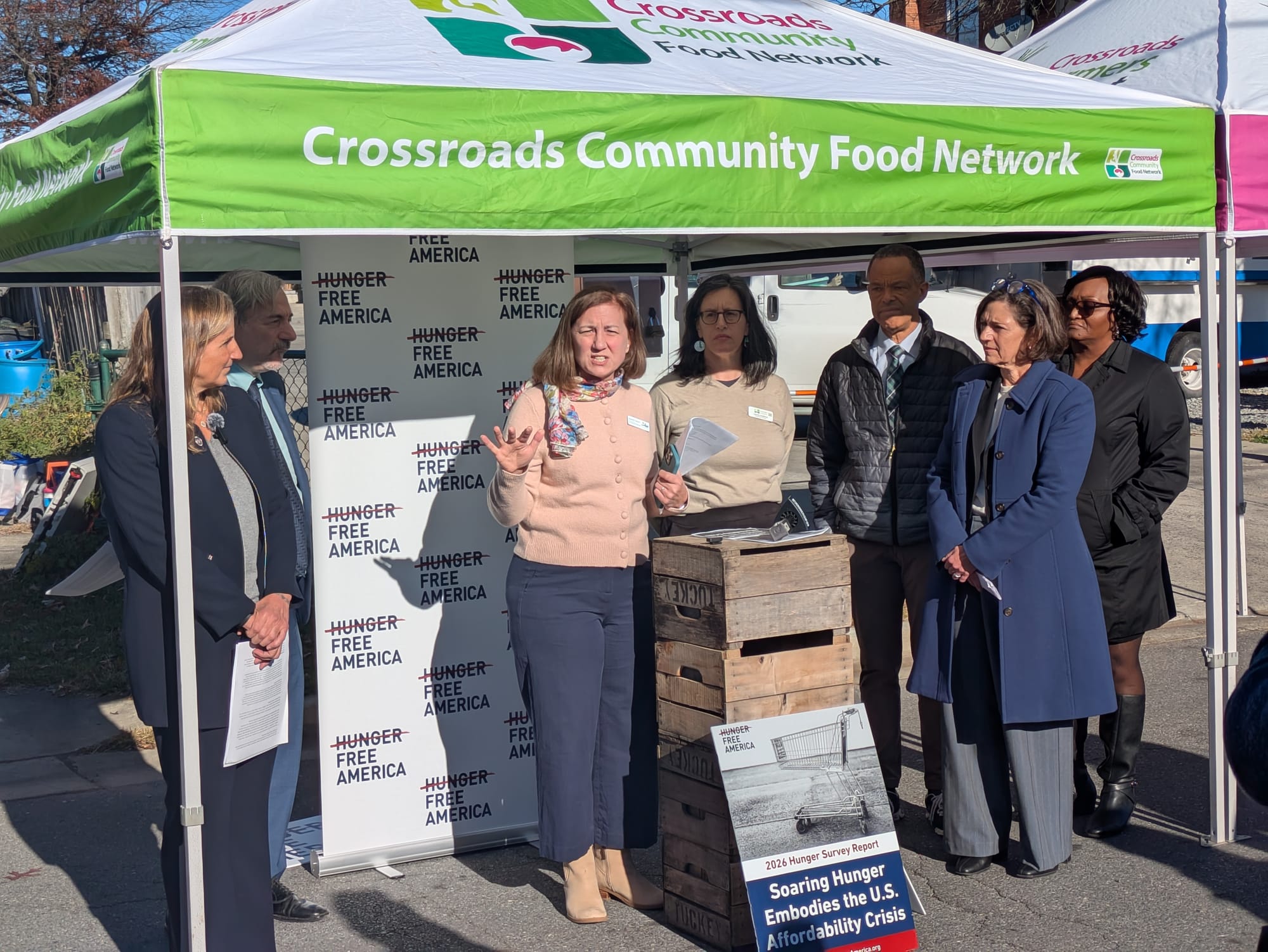
Takoma Park, MD
"No parent should have to put groceries back to fill a prescription" -Councilmember Laurie-Anne Sayles
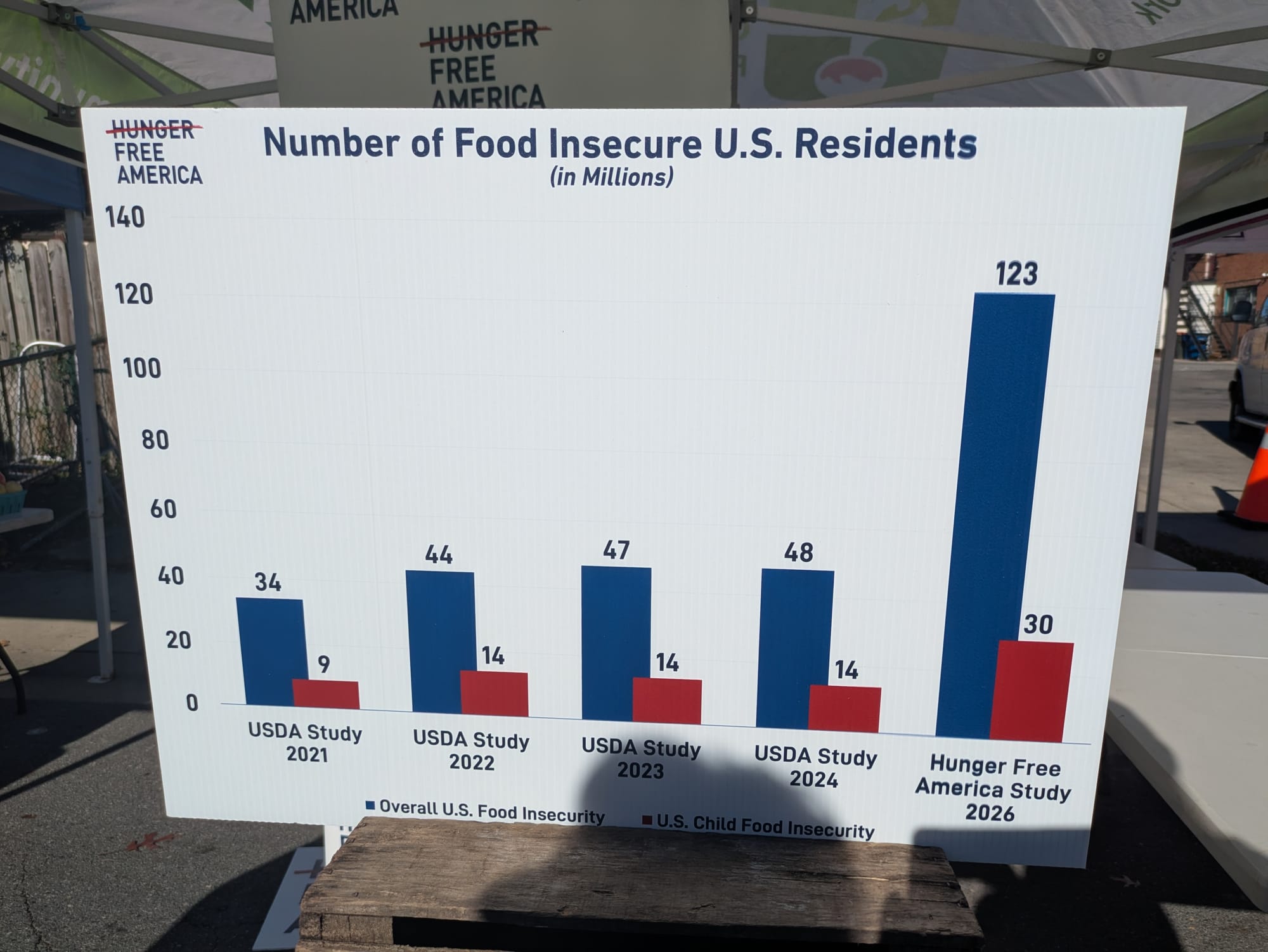
Hunger Free America CEO Joel Berg held a large chart showing a dramatic increase in food insecurity from 2024 to 2026. Logically, the chart made sense. Food affordability has been a constant topic of conversation for the past several years. Money buys less whether you're an individual household or a food assistance provider organization. Cuts to SNAP that have been implemented already, and those that are planned for early 2027, make the crisis even worse.
Berg called attention to the fact that the number of food insecure households on the chart from 2021 to 2024 all had "USDA Study" written underneath. Under the 2026 numbers it read "Hunger Free America Study." That's because we don't actually know the state of hunger in America. Our government has stopped measuring.
The USDA has been collecting data on rates of household food insecurity since 1996 through an annual US Census Bureau survey. In 2025, under the Trump Administration, USDA removed the Food Security Supplement questions from this survey. Policymakers relied for decades on having consistent results from a large population dataset to accurately measure changes in food insecurity.
Hunger Free America's press conference on the issue was held at the Crossroads Community Food Network Farmer's Market in Takoma Park, Maryland. The market was the first in the country to pilot what became the SNAP matching-dollars program back in 2007. The program was so successful at both providing fresh food access to SNAP recipients and supporting food economies, that it was written into the 2008 Farm Bill. USDA annually funds SNAP matching programs across the country through a program called GusNIP.
The market, located in the DC suburb of Montgomery County, Maryland was chosen for another reason. A 2026 Hunger Report by the Capital Area Food Bank showed a five-year high in rates of food insecurity for the broader region. Every county surveyed showed an increase in rates of food insecurity, except for Montgomery County. Local elected officials present at the press conference attributed the county's results to intentional investments including the creation of an Office of Food Systems Resilience.
Maryland State Delegate Lorig Charkoudian had a sharp message regarding the rising rates of food insecurity and the threat of more to come next year. "We're calling on Congress in the lame duck to reverse the SNAP cuts. And when we get that federal money, we'll invest our resources in Maryland to double and build on those benefits."
Charkoudian called the food security numbers "shameful" and said that those numbers came from a political choice. One, she said, that saw the wealthiest people in the country grow richer through tax cuts. "What we can do right now is to support families to not have to make the choice to pay for groceries or medicine."
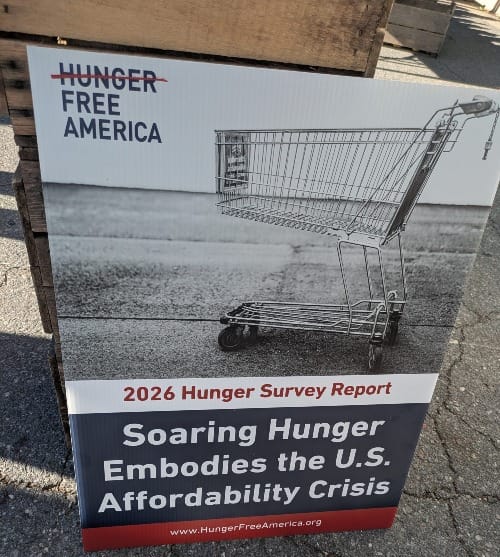
The Hunger Free America report contains twenty different federal policy recommendations including "Reverse all the SNAP cuts, restrictions, and state cost-share changes in H.R. 1" and "Halt the proposed Trump administration rule that would deny SNAP to another 6.3 million Americans by eliminating flexibility that states have in determining SNAP eligibility guidelines."
The Food Research and Action Center (FRAC) reports that over 6 million Americans have lost SNAP eligibility between January 2025 and July 2026. Starting in October 2027, changes from H.R. 1 will shift SNAP costs from the federal budget to individual states. California, Florida and New York are estimates to each shoulder between $1-2 billion in extra annual costs as a result. Advocates believe some states will simply cut the program eligibility, removing even more people from accessing SNAP.
Montgomery County Executive Marc Elrich, whose administration created the Office of Food Systems Resilience, explained how the county's experience during COVID-19 informed their current food security strategy. They stood up independently operated resource hubs in strategic locations to get services to residents, including food. Elrich, who began his career as an educator, spoke passionately about how hungry kids can't learn.
"When a kid says their last hot meal was lunch as school, and it's Monday morning, that makes an impact on you."


Comments ()