
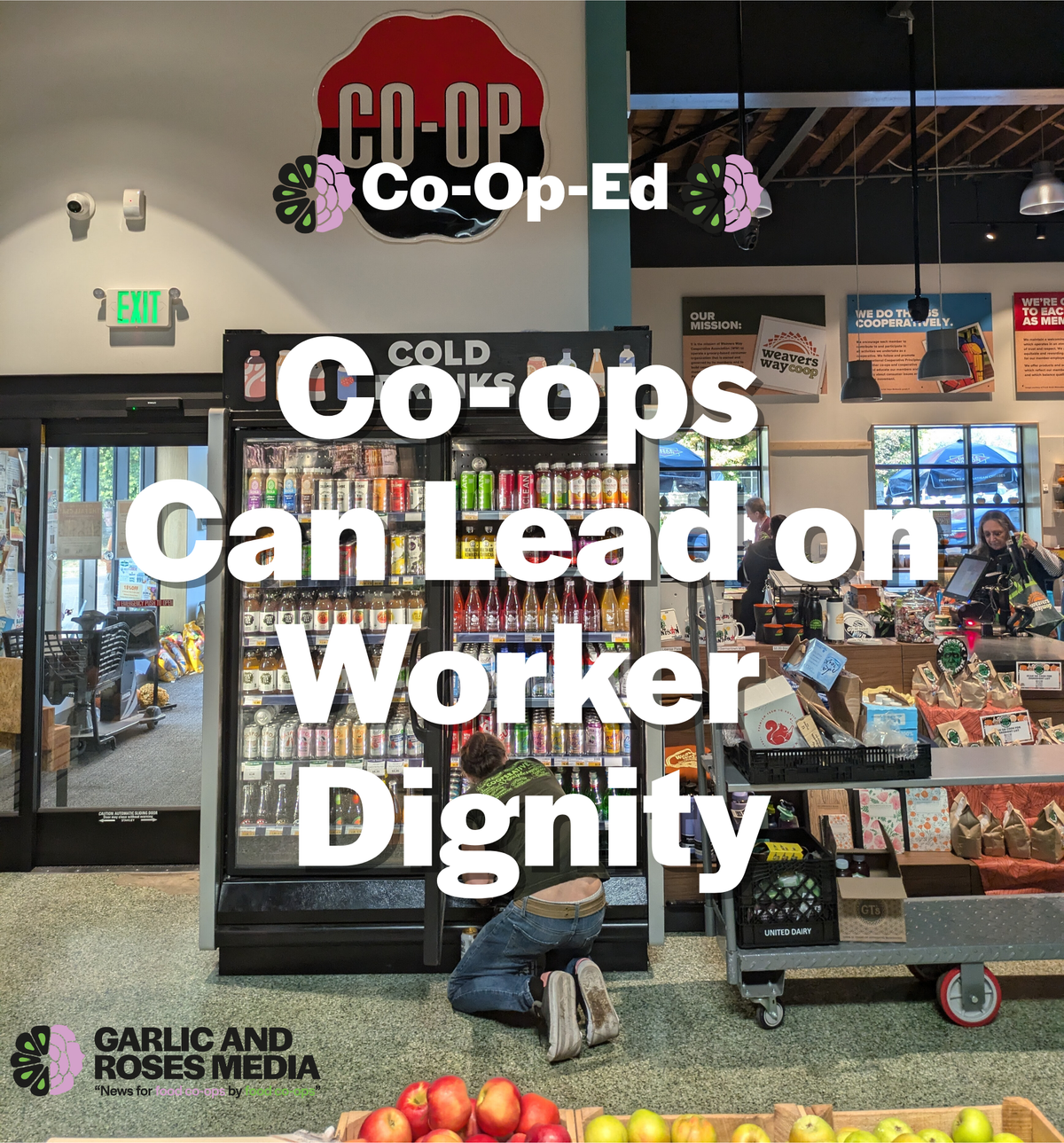
Co-ops Can Lead on Worker Dignity
“The best way to find out if you can trust somebody is to trust them.” ― Ernest Hemingway
An article caught my eye this week. It was about AI-powered headsets that are currently being tested by Burger King. Among other functions of the AI-assistant, it’s ability to monitor whether employees used key politeness words like “thank you” or “please” in their interactions drove most of the headlines. Like many others, I was reflexively revulsed by the idea of computers sorting staff members into a manners-based cohorts like Hogwarts run by Emily Post.
Advances in technology have changed the meaning and structure of work for every generation in human history. Our current moment of ‘advances’ increasingly rely on data and surveillance to achieve work-based outcomes. There is a deep discomfort that comes as trust in the workplace has been replaced with quantifiable verification. Security guards, once empowered to patrol the premises, now have to tap in at pre-selected points to prove to supervisors that they are indeed on patrol. Key performance indicators, the currency of the consultant class, have given managers the ability to rank staff effectiveness on a spreadsheet.
If you look back 30-years, it’s clear our society has boiling-frogged ourselves into a state of near constant surveillance. The shift has been so thorough that consumers now pay private companies for the privilege of sending them footage of their private residence. Roombas map our living rooms and the free new virtual ‘assistant’ reads our emails. The genie isn’t going back in the toothpaste tube, but we do still have choice in how much we employ surveillance and verification technology in our community-owned businesses.
There is of course a more dignified way, a more human way, to organize and evaluate work. It’s imperfect. It may leave productivity points on the floor. It may make those precious KPI charts look less impressive. As the corporate world around us chases the latest technology and its promise of only polite fast-food workers, those of us that work in cooperatives can choose a different path.
I believe that humans, and specifically humans who feel trusted and dignified in their jobs, still drive real lasting success. That is especially true in a retail or service-based workplace. Workers who understand their standing to be based upon a listening device, strapped to their head counting their “pleases”, will not feel in partnership with their employer. Treating workers with dignity and grace is a moral imperative, but it also may increasingly be a key business differentiator for cooperatives. After experiencing a 1984 workplace culture elsewhere, our ability to trust our workers will lead more of them to stay with us long term.
The promise of AI-based efficiencies will be a hard siren call to ignore. Food co-ops are in an extremely competitive business with sales competition and margin pressure at every turn. The thought of a new way to quantify workplace performance in a dispassionate, metrics-based system, will seem alluring, or even fair. But we also do lose something when we say that the value of a stockers is solely their speed or accuracy. Customers do come to the co-op to find their items on the shelf, but they also come to the co-op to feel community. Your chatty ‘un-productive’ grocery stocker may actually be your competitive advantage.
Employees can feel when they’re being watched. They know when managers are checking behind their every move. They may meet the minimum standards in those cases, but no more. Employees who feel trusted and empowered to do their work, will return that trust. They’ll be much more apt to help the organization reach its big picture goals or deliver fresh new ideas if they feel like a part of the team, not a replaceable cog. That type of management takes discipline, but the long term results are clear to me.
Working people deserve dignity and respect. If the rest of the corporate world won’t give it to them, cooperatives should be known as the place where workers are trusted and empowered.
If you would like to submit an op-ed to Garlic and Roses, email [email protected].
Comments ()