
Beyond Black History Month
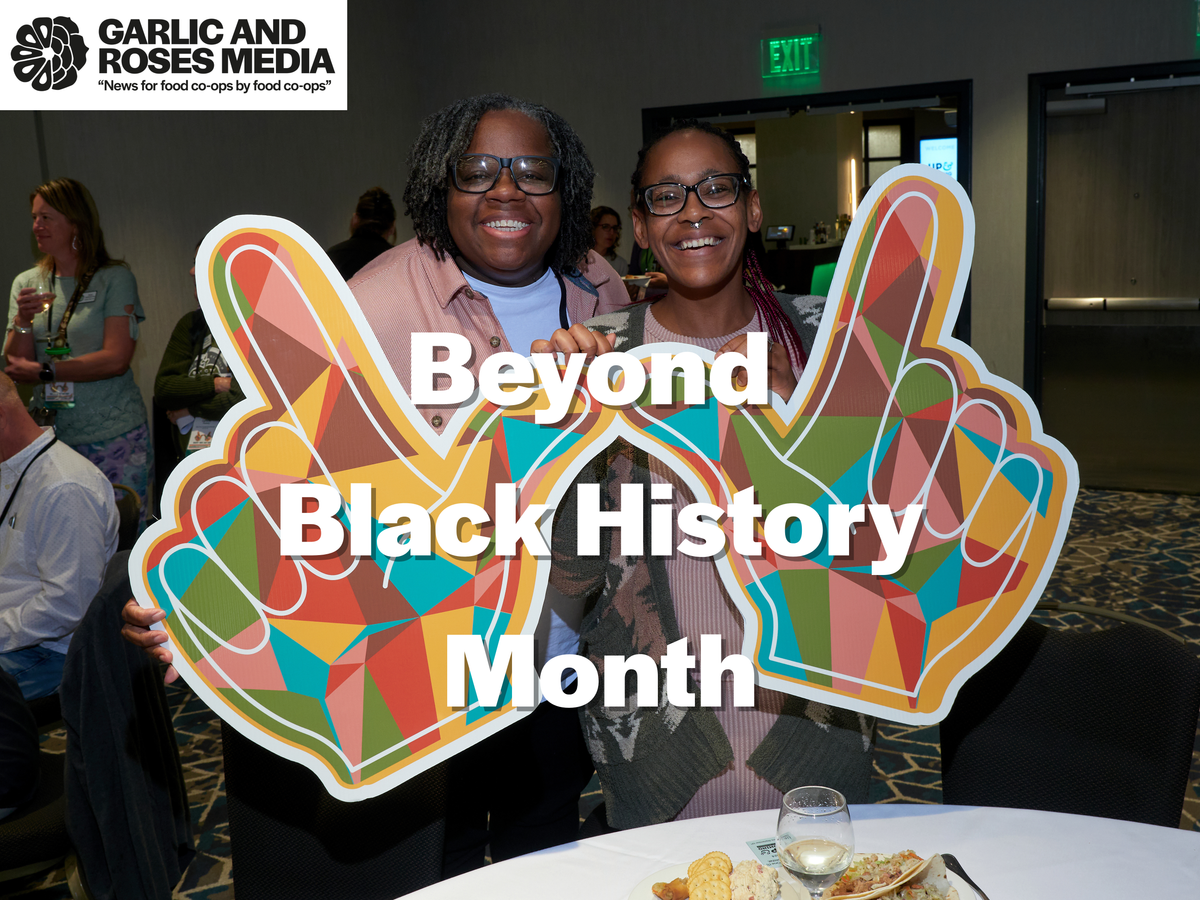
Black History Month is often marked by celebration honoring cultural contributions, historic leaders and resilience in the face of systemic harm. For food cooperatives, especially those serving predominantly white communities, this month also presents an opportunity to reflect on how our values show up in practice.
Co-ops often describe themselves as community centered justice oriented and committed to equity (not the money type). Yet many continue to struggle with how to engage Black communities and other People of the Global Majority (POGM) without becoming extractive, exploitive or performative. Black History Month invites the sector to move beyond symbolic gestures toward more accountable relational work.
Common approaches such as featuring Black-owned products for a month, hosting a themed event or sharing celebratory content are not inherently harmful. But when they are disconnected from long term strategy, they risk reinforcing the very dynamics co-ops seek to disrupt using Black presence for credibility rather than building structures that support belonging.
A critical question for co-ops to ask is: Are we seeking representation or are we willing to change our systems?
True engagement requires more than visibility. It requires examining policies, leadership pathways, vendor relationships and workplace culture. It also requires accepting that trust may not be immediate. Historical and ongoing exclusion from cooperative spaces has shaped how many Black and Brown communities experience food access, ownership and economic participation.

The U.S. food system is inseparable from Black history through enslavement, forced agricultural labor, land dispossession and undercompensated expertise. Today Black farmers and food entrepreneurs continue to face barriers to land access, financing, insurance and distribution.
When co-ops partner with Black owned businesses or producers’ equity must extend beyond shelf space. It must include:
-Fair contracts and payment terms
-Realistic production expectations
-Transparency in standards and timelines
-Support that does not rely on unpaid emotional or educational labor
This is not about charity. It is about aligning cooperative practice with cooperative principles.
Efforts to bring in more Black people and other POGM often focus on outreach. However, outreach without internal change can unintentionally replicate harm. People notice who holds power whose voices shape decisions and how conflict or feedback is handled.
Belonging is not created through programming alone. It is created through consistent behavior, credible commitment and shared accountability.
Co-ops committed to belonging might ask:
-Do our staff leadership and board reflect the communities we say we want to serve
-Are our policies flexible enough to meet different cultural needs and realities
-How do we respond when equity work creates tension or discomfort
-Who is asked to do the labor of change
Black History Month can be a meaningful moment of focus, but it should not be the only time co-ops engage these questions. When treated as an annual campaign rather than an ongoing practice it reinforces the idea that equity is seasonal rather than structural.
For co-ops this means:
-Investing in long term relationships rather than one-time initiatives
-Supporting Black owned vendors beyond themed months
-Preparing for feedback without defensiveness
-Understanding that progress is not always visible or immediate
Equity work in cooperative systems is not about arriving at a destination. It is about committing to a way of operating one that centers dignity repair and shared power.
As we honor Black history, we are also called to consider the future we are helping to build. Food cooperatives have the potential to be sites of economic justice and collective care, but only if we are willing to examine not just what we celebrate, but how we behave.
Black History Month is an invitation to deepen our relationships, clarify our values and move from performance toward practice.
Stay mindful and stay hydrated.



Comments ()